Target intelligence
Detect weak or ambiguous returns in cluttered scenes.
Our purpose
Learning from the full radar signal, not just the image, to detect targets, changes, and deception that standard pipelines can miss.
PerspeQtive turns raw radar data into target intelligence: material cues, ground perturbations, moving targets, decoy signatures, dark vessels, and subtle changes hidden in noisy scenes.
What we build
Radar intelligence models
Where we start
Raw SAR / SLC-IQ data
What it unlocks
Targets · change · deception
AI's current blind spot
Radar sensors do not just capture images. They capture complex waves: amplitude and phase.
Many AI pipelines flatten that measurement into image-like inputs. Half of the complex signal can be discarded before training begins, including information linked to material response, motion, coherence, and subtle change.
Sensor output: full radar signal
Amplitude + phase captured
AI bottleneck
Phase discarded before the model sees it
Blind decisions
Missed targets, false alarms, ambiguous signatures
50%
of the complex radar measurement can be discarded before AI training
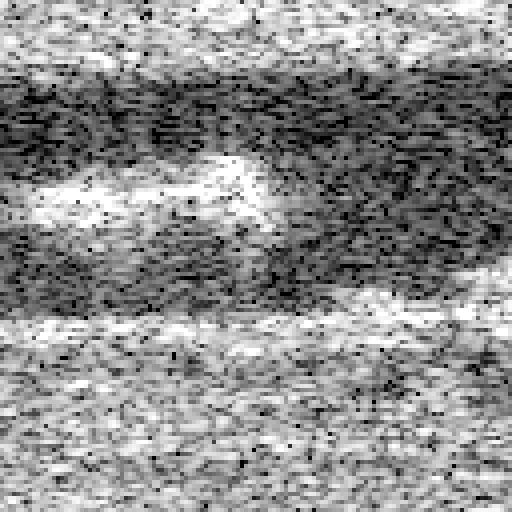
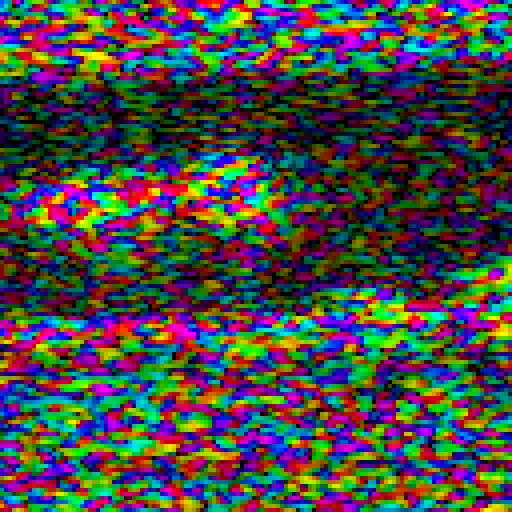
Image view → signal view
Drag between a conventional amplitude view and PerspeQtive's full-signal readout.
The goal is not a prettier image. The goal is better evidence for the model: stronger target contrast, clearer separation, and signal structure that survives noise.
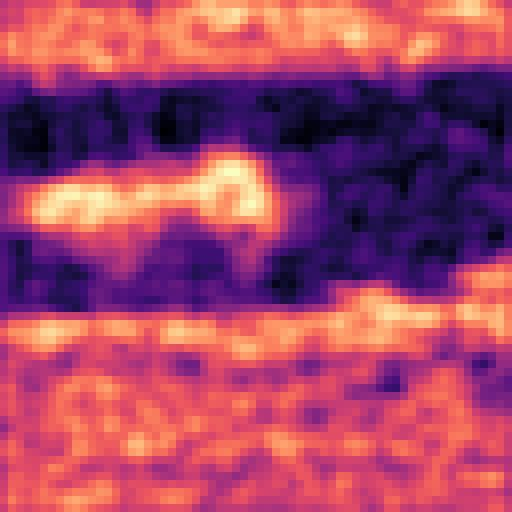
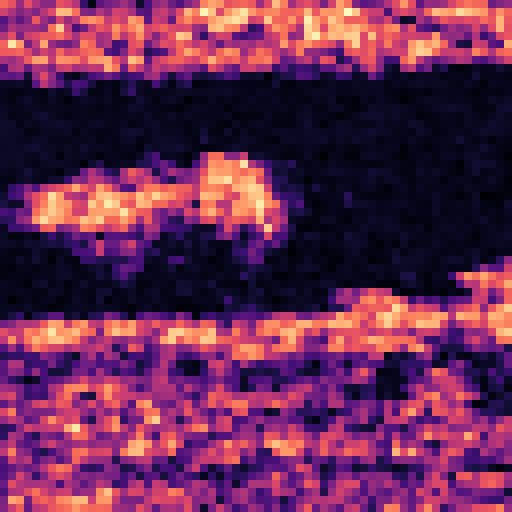 PerspeQtive full-signal readout Amplitude-only view
 Solution
PerspeQtive trains radar models on richer signal representations, so they can detect targets, motion, changes, and ambiguous signatures in conditions where image-based models struggle.
Detect weak or ambiguous returns in cluttered scenes.
Find ground perturbations, coherent shifts, and subtle differences between passes.
Expose scattering behavior linked to decoys, surfaces, and object composition.
Return target maps, confidence, failure cases, and benchmark comparisons.
Quantum core
Radar waves and quantum states share the same mathematical language: amplitude, phase, interference, and measurement.
PerspeQtive uses that bridge to build AI models that preserve radar wave structure before the signal is reduced to an image, running entirely on standard GPUs.
This is not a quantum computer. It is quantum mathematics applied to radar intelligence.
Radar signals contain phase, interference, and coherence patterns that image-based AI can underuse.
Quantum mathematics offers a natural way to represent wave-like information.
PerspeQtive brings that representation into deployable AI models on standard hardware.
Where it matters
Radar is used when optical imagery fails: night, cloud, smoke, distance, denied areas, spoofed navigation. PerspeQtive targets the cases where preserving more of the radar signal can change the decision.
These are deployment targets, not claims of completed operational validation. Customer studies should validate each mission against customer archives and agreed baselines.
Benchmarks — measured on real SAR archive data
PerspeQtive benchmarks show stronger target contrast, class separation, and robustness under speckle noise before mission deployment. The next step is to test the same method on customer radar archives and operational baselines.
+0 dB
Target contrast gap
TCR median: +7.32 dB vs +0.74 dB
The target becomes easier to separate from clutter before classification.
0×
Class separation
Fisher: 0.413 vs 0.194
Object classes separate more clearly at the decision boundary.
+0 pp
Speckle robustness
Accuracy in noise: 71.6% vs 53.2%
Radar models remain useful under noisy SAR conditions.
Feature-level benchmarks on real SAR archive data, against like-for-like baselines. Customer studies validate the result on operational archives and agreed baselines.
Vision
PerspeQtive is building the model system for radar intelligence: signal ingestion, richer representation, task models, evaluation, evidence, and secure deployment. Radar first: defense, maritime, infrastructure, and environmental intelligence.
The company that turns radar waves into operational intelligence.
Founder
Ruben Maarek founded PerspeQtive from a simple technical conviction: AI should learn from the physics of the signal, not only from images.
His work combines quantum machine learning, GPU simulation, and radar signal representation to build models that run on standard hardware, with no quantum computer required.
Master in Quantum Machine Learning
QbitSoft and J.P. Morgan experience
Quantum mathematics applied to radar intelligence

Ruben Maarek
Founder & CEO
Quantum mathematics for radar intelligence
Start here
Start with one archived SAR / SLC-IQ sample. PerspeQtive benchmarks full-signal radar AI against your current approach and delivers a Go/No-Go report for deployment.
Data stays under NDA. PerspeQtive methods remain PerspeQtive IP.